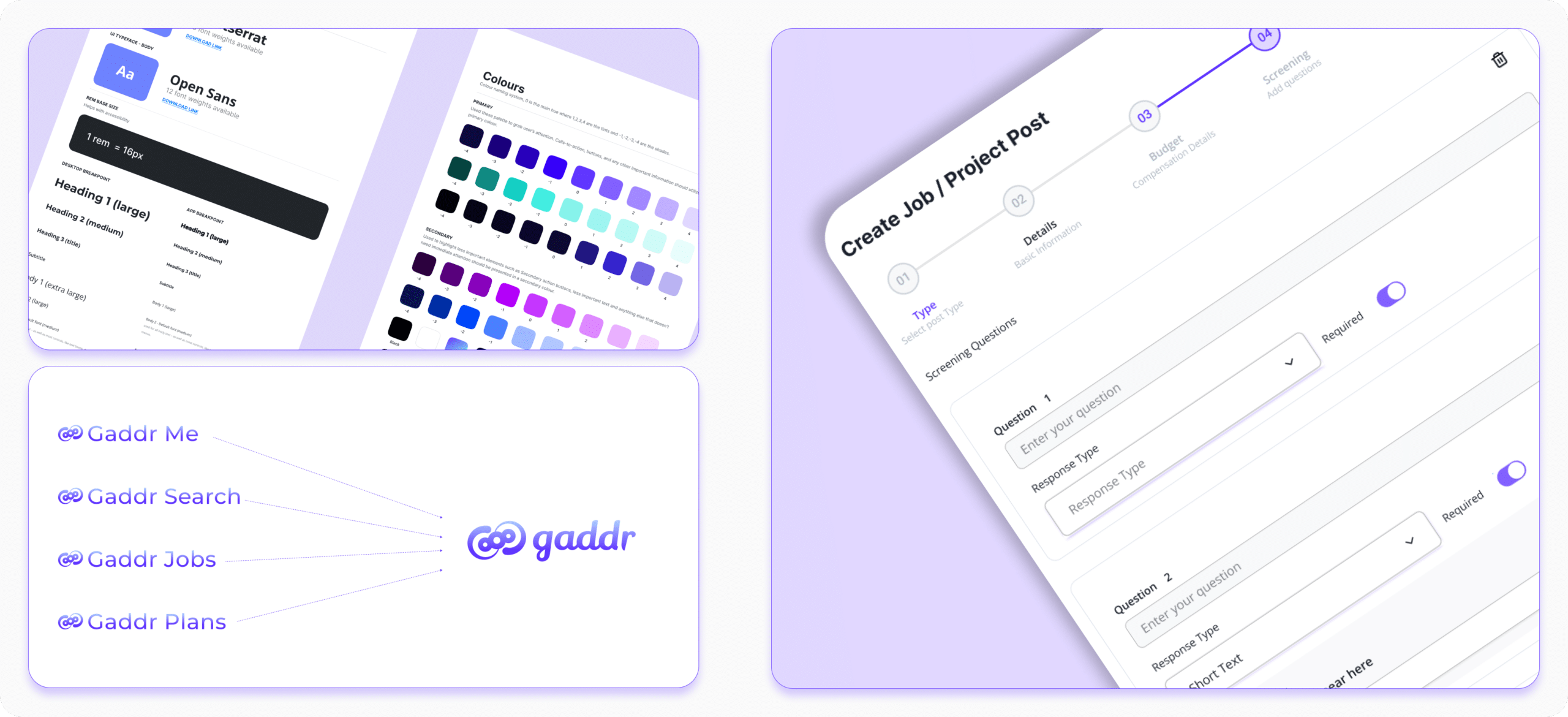
Gaddr Jobs
From independent app to unified suite: The evolution of the Gaddr Ecosystem.
01. The Context
When I joined, the product landscape was in the middle of a major structural shift. We were transitioning from an independent app called Flowerwork into a fully unified ecosystem.
The goal was to integrate this standalone tool into the Gaddr suite, splitting its functionality into two specialized products: Gaddr Plans and Gaddr Jobs. My mission was to ensure this transition felt seamless, connecting the new tools with Gaddr Me (Universal Profile) and avoiding any user friction during the migration.
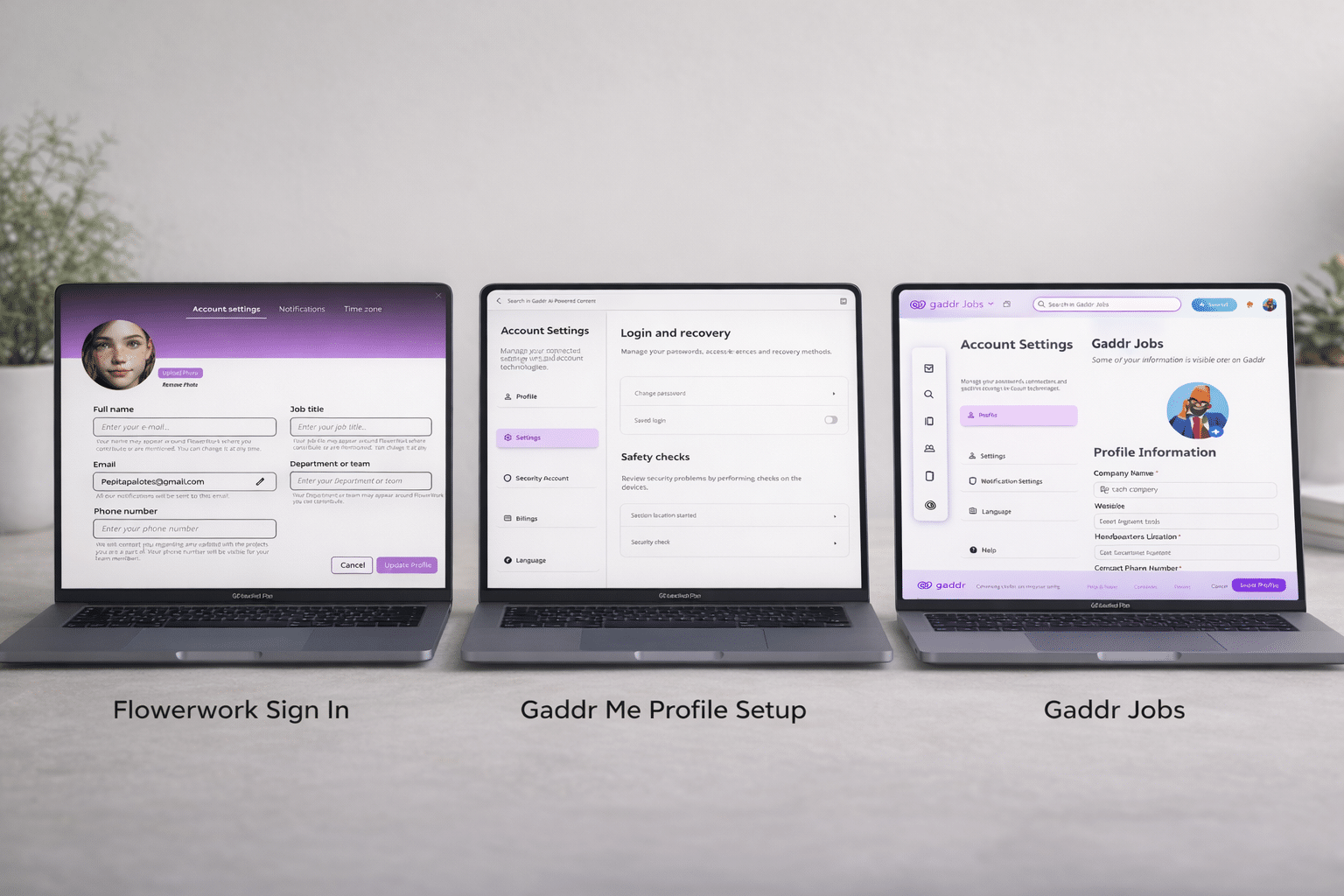 The Evolution: From the independent 'Flowerwork' app to the unified Gaddr Suite.
02. The Challenge
Scaling culture before scaling the product
The challenge was twofold: technical and cultural. Technically, we had legacy components from the old Flowerwork tool, but they didn't match the new visual language of Gaddr Me. Culturally, I took over a group of talented interns who lacked a unified methodology.
"I didn't just design screens — I designed how we worked. My role shifted from execution to enablement."
Design was happening in isolation, and developer handoff was a nightmare. To deliver the MVP on time, I had to professionalize the department immediately.
03. The Architecture
From Chaos to System
We couldn't just build on top of the existing foundation. When I audited the state of design at Flowerwork, I found a disconnected ecosystem where every designer worked in isolation.
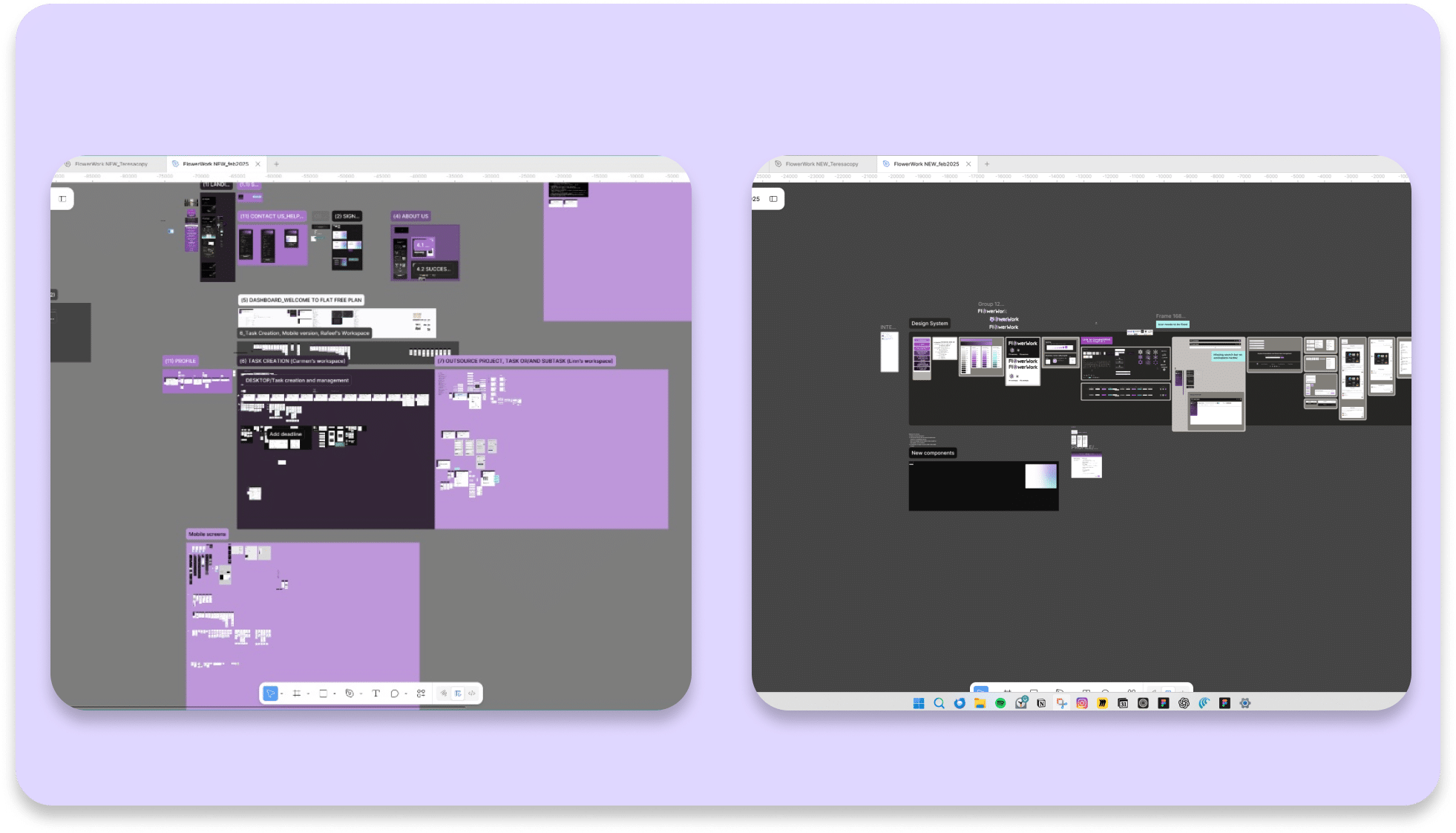 The Starting Point: Isolated sandboxes and lack of a unified source of truth.
To fix this, I didn't just redesign components; I redesigned our workflow. I established a new Governance Model that standardized everything from naming conventions to file structures.
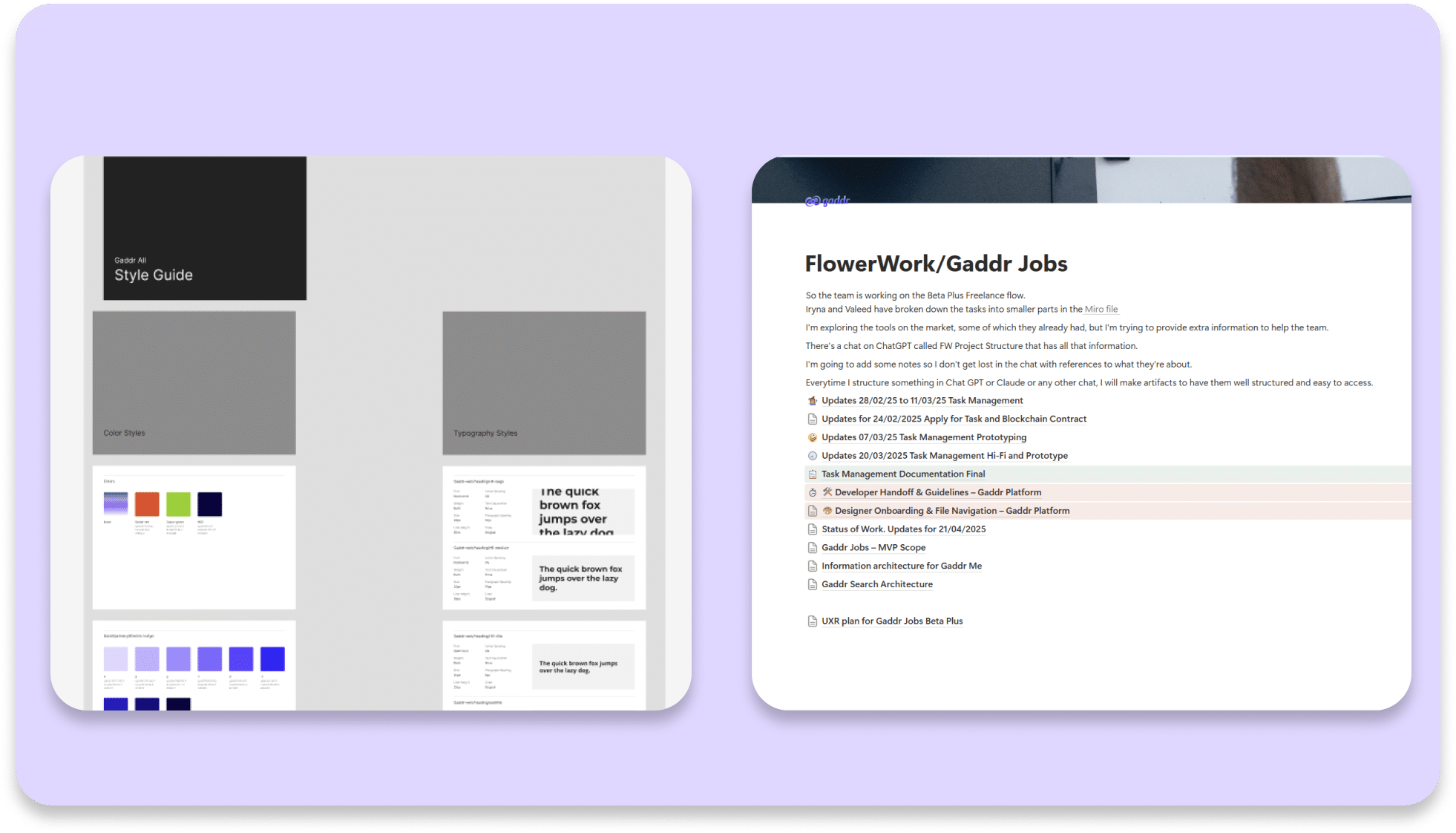 The Governance: Establishing clear style guides and onboarding documentation for the team.
Finally, we translated these rules into a modern Figma setup utilizing Variable Collections. This allowed us to switch themes and manage spacing tokens mathematically, ensuring consistency across the entire Gaddr suite.
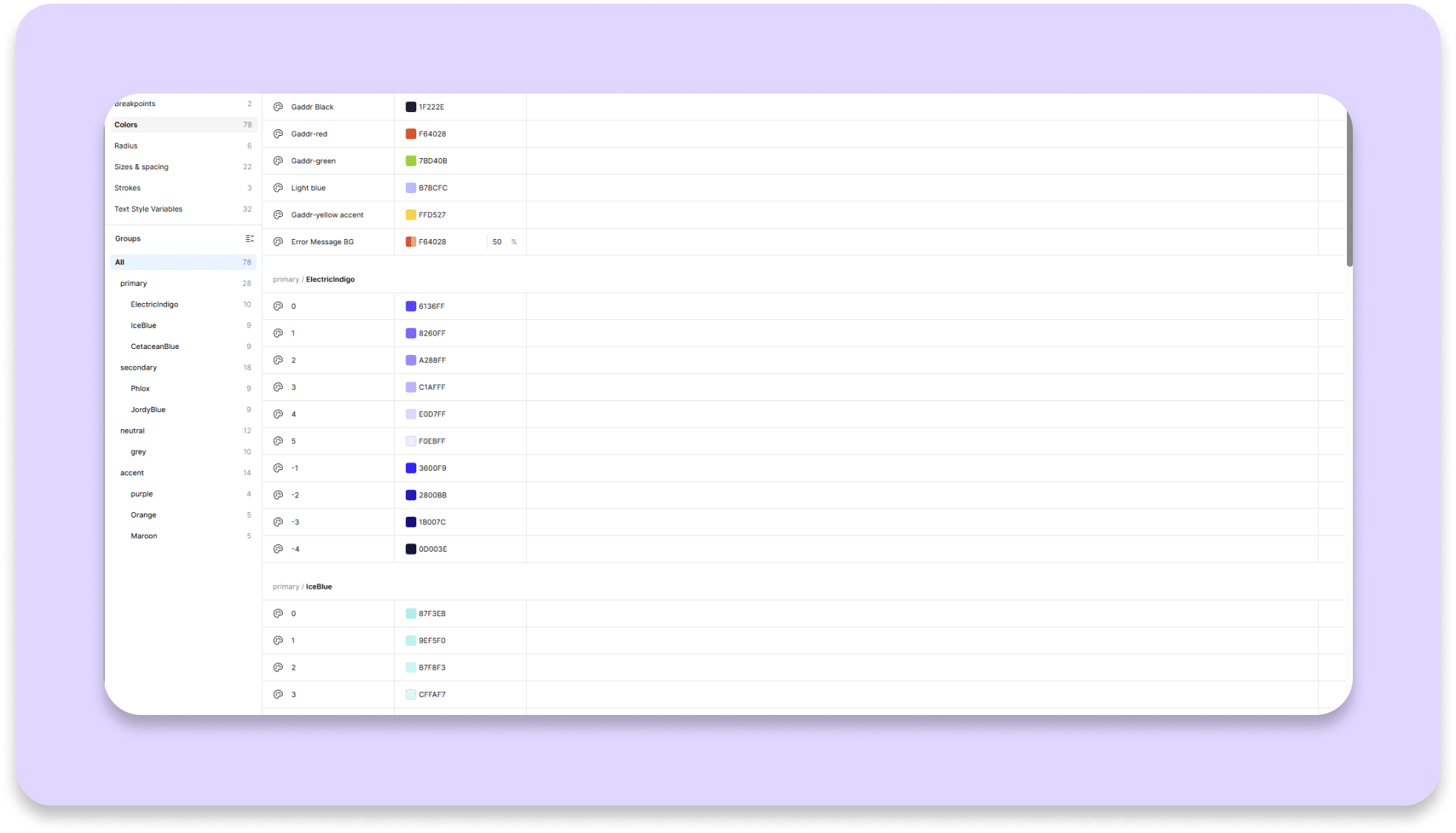 Modern Initial Implementation: Using Figma Variables for semantic tokens and future theming.
- System Synchronization I audited the styles of Gaddr Me and translated them into a new library for Gaddr Jobs. This ensured that a user jumping between apps wouldn't feel a disconnect.
- Component Architecture & Governance As visualized above, I moved the team from "drawing screens" to "assembling systems", enforcing strict naming conventions to ensure reusability.
Hands-on UI: The Recruiter Flow
While leading the system overhaul, I maintained primary ownership of the product's core module: The Recruiter Experience.
My mission was to design the end-to-end Job Creation flow. By applying our new system, I solved a specific challenge: reducing friction in a data-heavy process.
1. Ecosystem Integration (Gaddr Me)
Instead of asking recruiters to fill in company details from scratch, I designed the flow to pull data directly from their existing Gaddr Me profile. This eliminated redundancy.
2. Progressive Disclosure
I broke the intimidating "Job Post" form into digestable steps, reducing cognitive load.
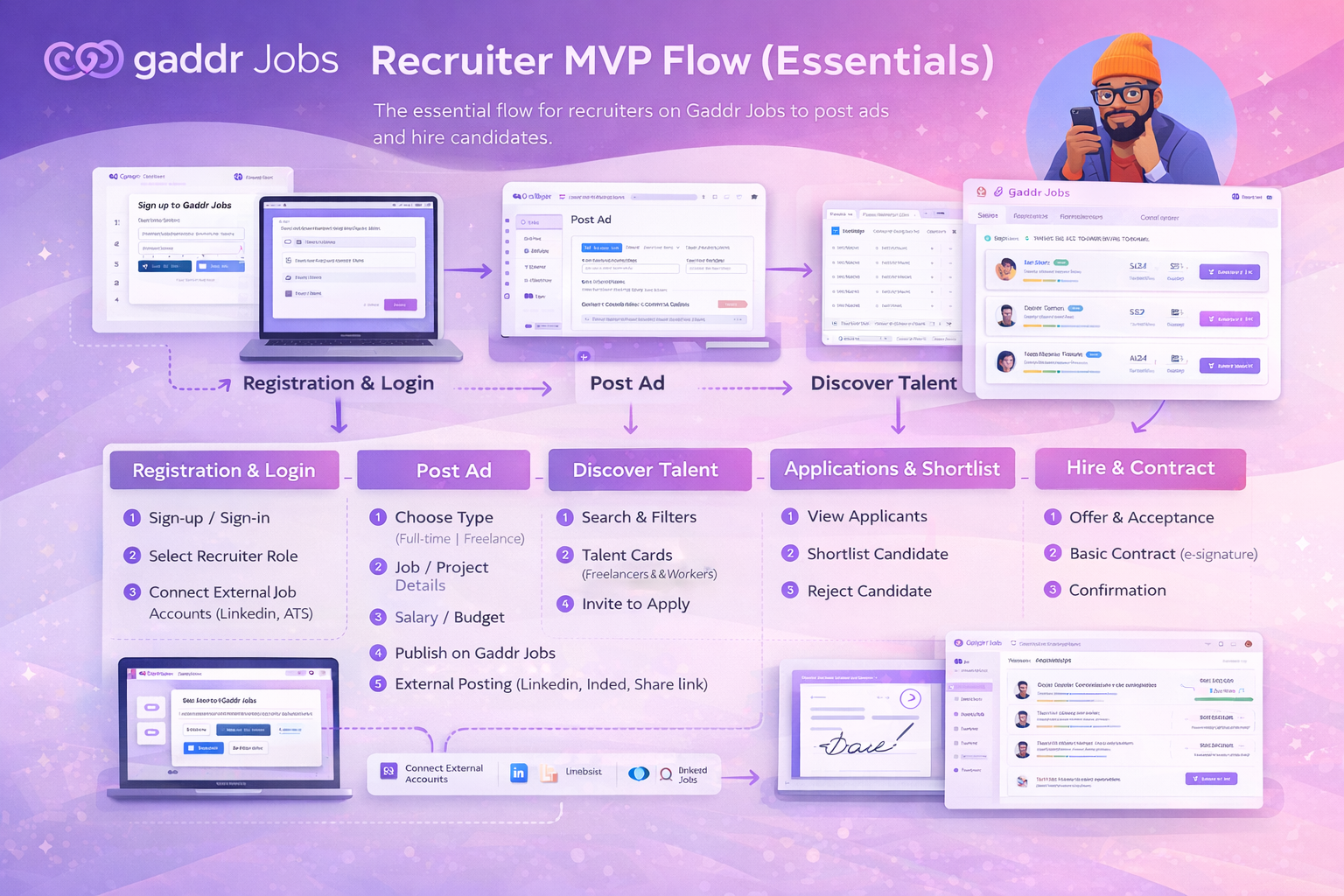 The Final Recruiter Flow: Clean, simple, scalable and aligned with the suite.
05. Product Strategy
Adapting to Business Constraints
Midway through the project, the CEO approached me with a critical concern. The initial roadmap, which included complex AI matching and internal payment systems, was putting our MVP delivery timeline at risk.
🤝 Strategic Alignment
The CEO raised concerns about the complexity of integrating unproven AI tools so early in the cycle. I analyzed the trade-offs and fully aligned with his direction.
We jointly decided to pivot: we removed the "AI Auto-Match" and internal payments from the launch. This allowed us to focus on shipping a stable, high-quality core experience rather than a buggy, feature-bloated one.
06. Research Leadership
The CEO raised concerns about the complexity of integrating unproven AI tools so early in the cycle. I analyzed the trade-offs and fully aligned with his direction.
We jointly decided to pivot: we removed the "AI Auto-Match" and internal payments from the launch. This allowed us to focus on shipping a stable, high-quality core experience rather than a buggy, feature-bloated one.
Governance for AI & Future Steps
Even though we postponed the AI integration, I ensured the product was ready for it. My role included defining the Research Governance framework for the next phase ("Beta Plus").
I designed the integration points where AI would eventually live, ensuring the UI was future-proof and that upcoming AI features would address validated user needs rather than purely technical possibilities.
I started with the Job Seeker flow, as it was the area that would benefit most from AI integration.
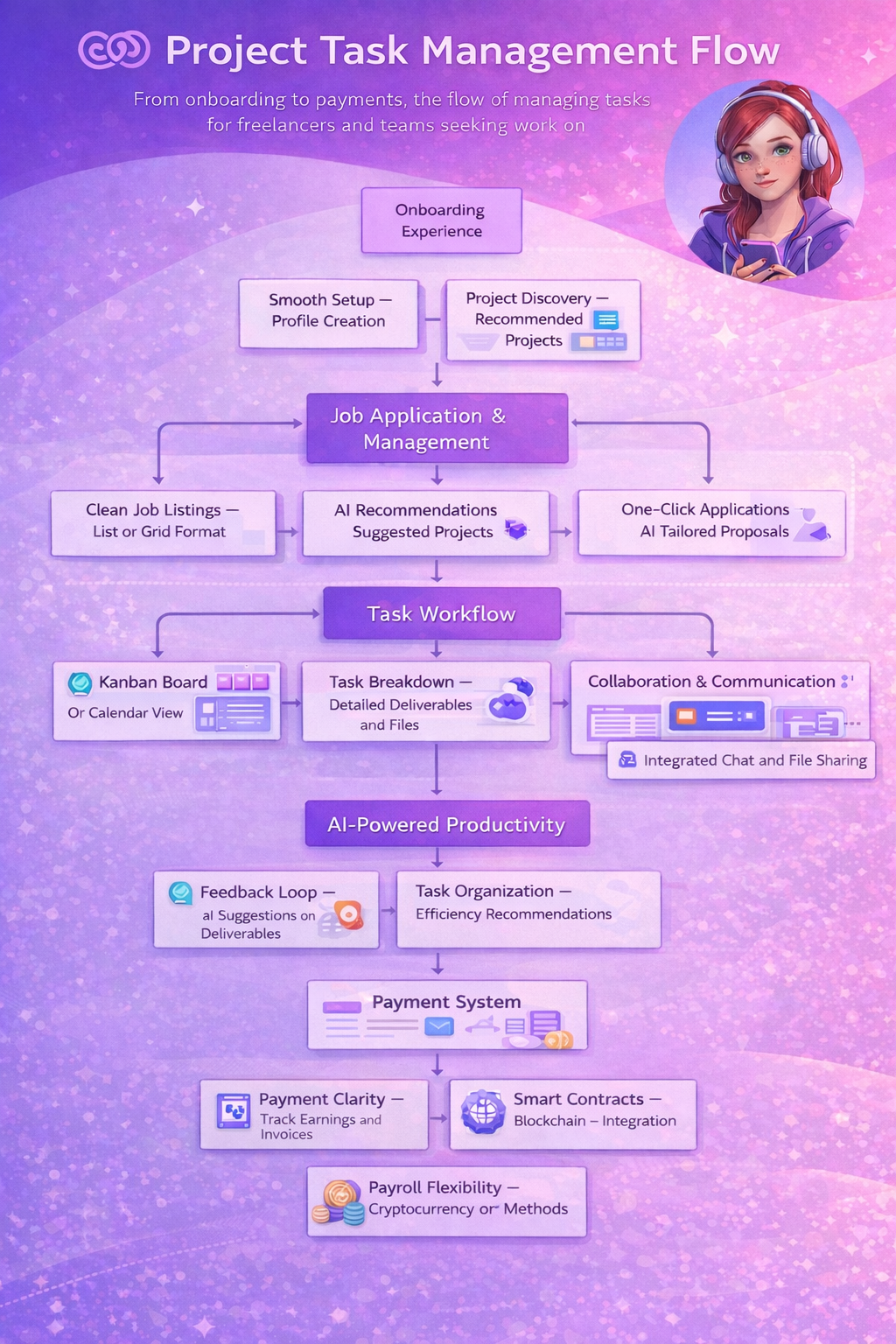 Project Task Management Flow — Job Seeker Perspective
This flow represents the end-to-end journey of a job seeker on Gaddr, from onboarding and project discovery to task management and payment.
It combines AI-assisted recommendations, streamlined applications, and a structured task workflow with integrated communication and progress tracking.
The experience is designed to reduce friction, support collaboration, and provide clarity and transparency throughout the entire work lifecycle.
Final Reflection
Designing Gaddr Jobs wasn't just about building a new product; it was about learning how structure and clarity can hold a team together. As a Lead Designer, I discovered that foundations aren't made of components, but of shared understanding.
"Clear flows before
clever tools."
clever tools."
Only when the foundations are solid can technology make life better instead of more complicated. Sometimes, the most powerful design decision is to clear the way.
Selected Works
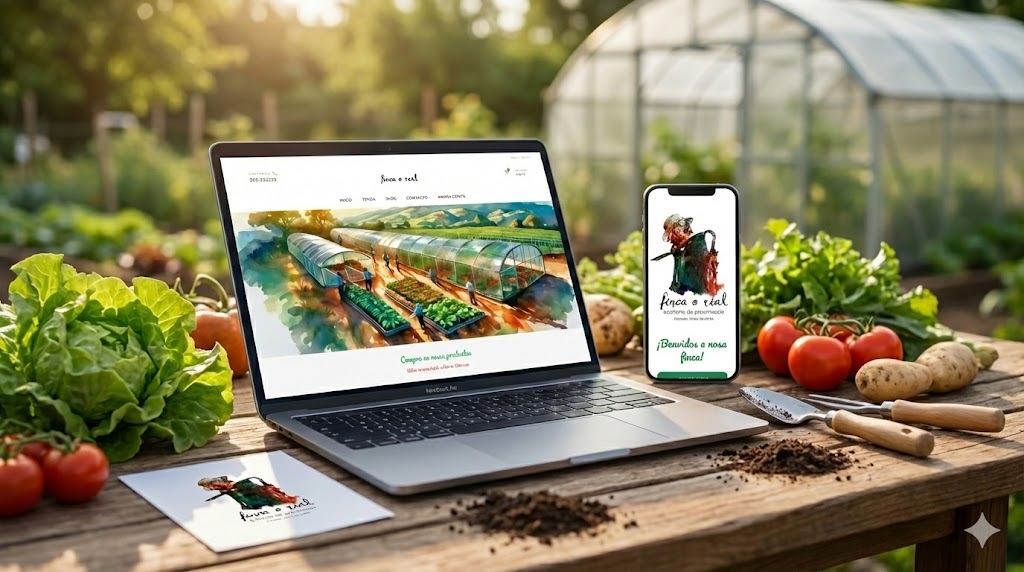
Finca O RialBranding. E-commerce.
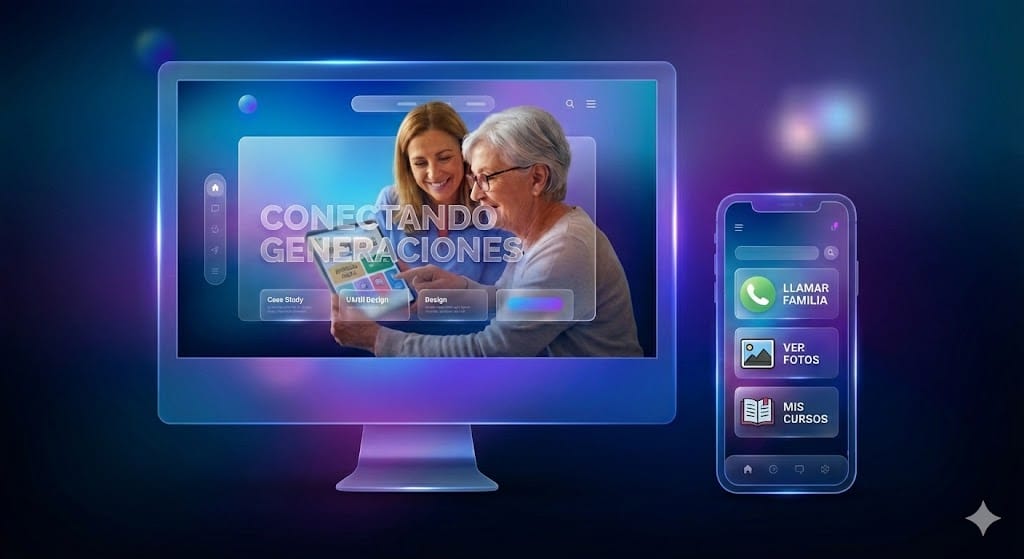
AprenticBridging the Digital Divide for the Silver Economy
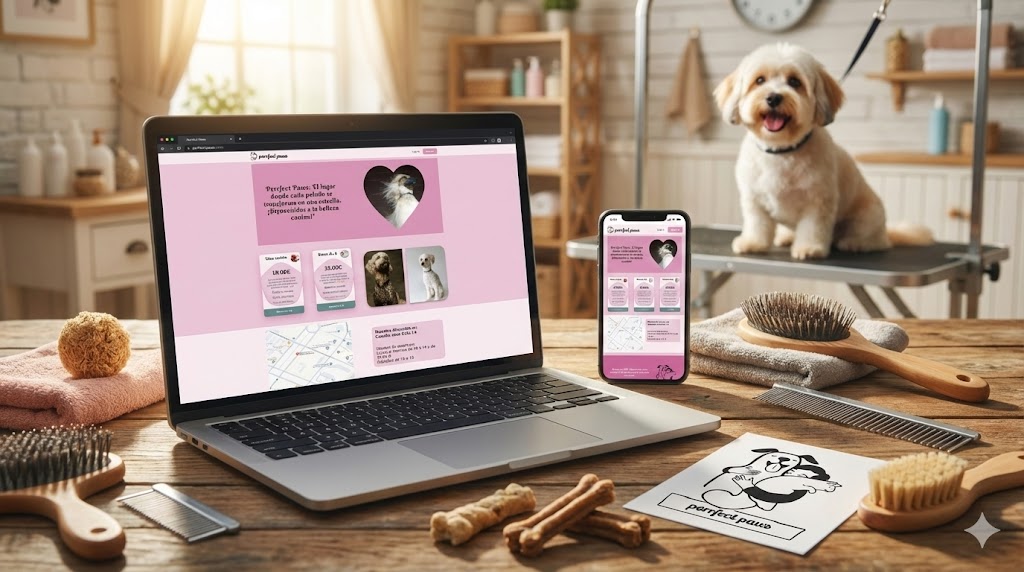
Perrfect PawsVisual Identity and Web Design
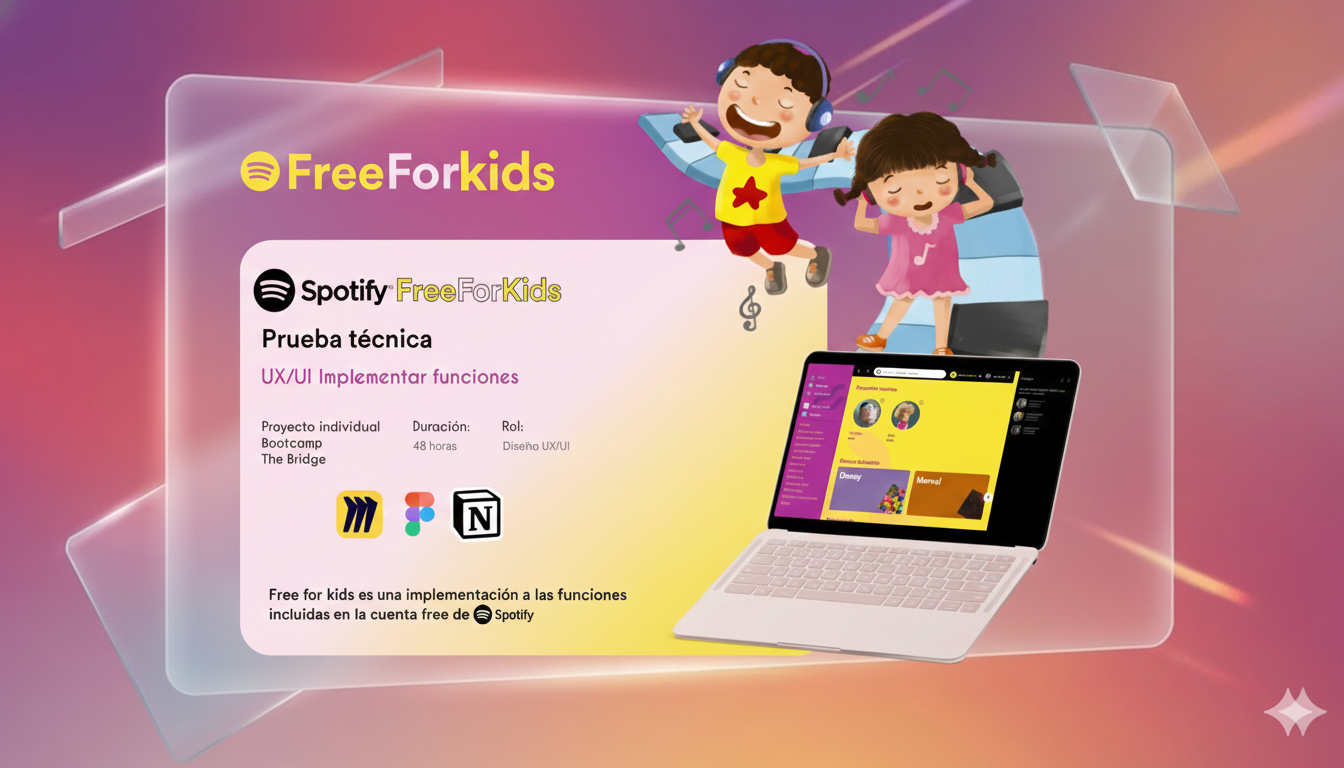
Free for Kids by SpotifyUX design
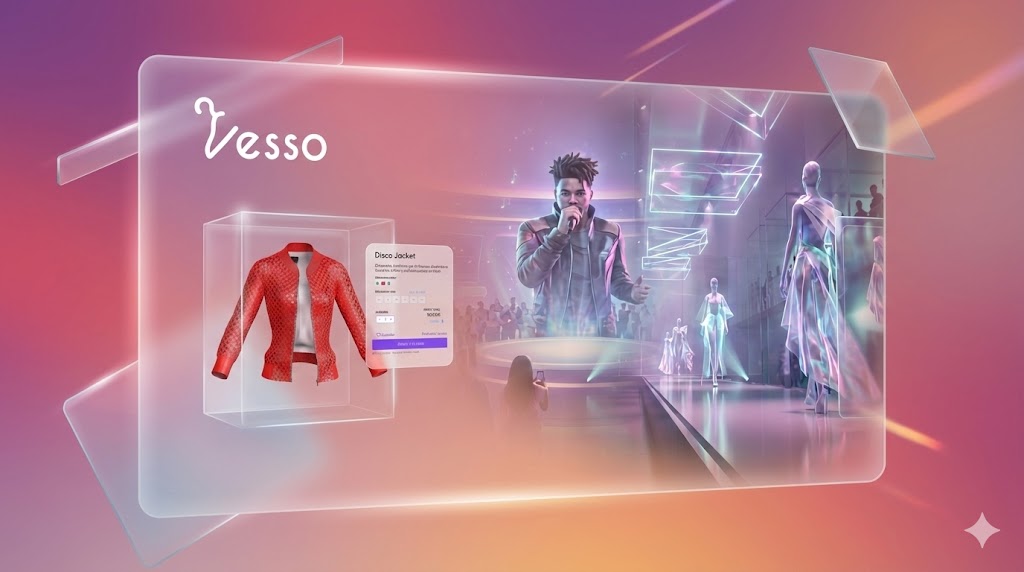
VessoUX Design e-commerce
Hygea Case StudyUX Design